

Atal Bihari Vajpayee was a towering figure in Indian politics, an iconic leader, gifted poet, and visionary statesman who played a pivotal role in shaping modern India. Born on December 25, 1924, in Gwalior, Madhya Pradesh, into a humble family, he displayed an early passion for literature, debate, and public service. His eloquence, charisma, and unwavering commitment to national interest would eventually make him one of the most beloved and respected leaders in Indian history.
Vajpayee began his political journey as a young activist in the Rashtriya Swayamsevak Sangh (RSS) and later became a founding member of the Bharatiya Jana Sangh, which eventually evolved into the Bharatiya Janata Party (BJP). Over the decades, he emerged as the moderate and inclusive face of his party, known for his ability to bridge ideological divides and reach across the aisle. His wit, sense of humor, and poetic soul endeared him even to his political opponents, who often described him as the “gentleman of Indian politics.”
As India’s 10th Prime Minister, Vajpayee served three terms—briefly in 1996, then from 1998 to 2004—becoming the first non-Congress leader to complete a full five-year term. His tenure was marked by bold decisions such as conducting India’s nuclear tests in Pokhran in 1998, which established India as a nuclear power, and initiating historic peace talks with Pakistan, including the famous Lahore bus journey. He also spearheaded major infrastructure projects like the Golden Quadrilateral highway network and liberalized India’s economy, setting the stage for sustained growth.
Beyond politics, Vajpayee was celebrated for his love of poetry and his philosophical reflections on life, which he often shared in speeches and writings. His dignified demeanor and statesmanlike conduct earned him admiration not only in India but on the global stage as well. In recognition of his immense contributions, he was awarded the Bharat Ratna, India’s highest civilian honor, in 2015.
Atal Bihari Vajpayee’s life story remains an enduring example of principled leadership, compassion, and dedication to the nation. Even after his passing in 2018, he continues to inspire millions as a symbol of integrity, vision, and hope for India’s democratic future.
In this blog, we will explore every facet of Atal Bihari Vajpayee’s remarkable life, from his humble beginnings and family background to his towering achievements as a statesman, poet, and leader. Whether you are an admirer of his political vision, his moving poetry, or simply curious about the man who shaped India’s destiny in profound ways, this comprehensive biography covers it all. Journey through the inspiring story of a leader whose legacy continues to resonate across generations.
Who is Atal Bihari Vajpayee?
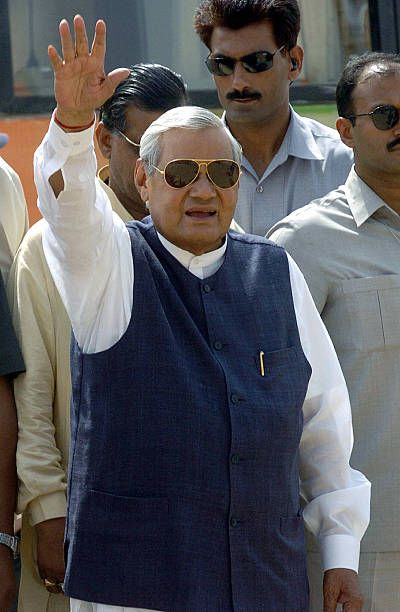
Atal Bihari Vajpayee was an Indian statesman, poet, and orator who became one of the most respected and beloved leaders in the country’s history. Born on December 25, 1924, in Gwalior, Madhya Pradesh, into a modest family, Vajpayee rose to become India’s 10th Prime Minister and the first non-Congress leader to complete a full five-year term in office. His sharp intellect, compassionate leadership, and eloquence on national and international platforms made him a towering figure in Indian politics for over six decades.
Vajpayee began his public life as a member of the Rashtriya Swayamsevak Sangh (RSS) and was a founding member of the Bharatiya Jana Sangh, the precursor to the Bharatiya Janata Party (BJP). Over time, he became known as the moderate and inclusive face of the BJP, winning admirers across the political spectrum. His dignified demeanor and statesmanlike approach to politics earned him the reputation of a leader who placed the nation’s interest above all else.
As Prime Minister, Vajpayee is remembered for his bold decisions, such as ordering the Pokhran-II nuclear tests in 1998, which asserted India’s strength on the global stage, and his sincere efforts toward peace with Pakistan, exemplified by his famous Lahore bus journey in 1999. His government also launched ambitious infrastructure projects like the Golden Quadrilateral highway network and steered India’s economy toward modernization and growth through liberalization and reforms.
In addition to his political achievements, Vajpayee was a gifted poet and a deep thinker, often weaving his love of language into his speeches and writings. His poetry reflected his philosophical outlook on life, resilience, and unwavering optimism, earning him affection far beyond the political arena.
Throughout his career, he was widely respected by allies and rivals alike for his integrity, humility, and vision for India’s future. In recognition of his exceptional contribution to the nation, he was awarded India’s highest civilian honor, the Bharat Ratna, in 2015.
From a small-town boy with a love of words to a statesman of global stature, Atal Bihari Vajpayee’s life remains an enduring source of inspiration. His story is a testament to how principled leadership, poetic grace, and unwavering dedication to one’s country can leave an indelible mark on history.
Atal Bihari Vajpayee: Wikipedia Overview
| Real Name | Atal Bihari Vajpayee |
|---|---|
| Age (at death) | 93 years |
| Date of Birth | December 25, 1924 |
| Date of Death | August 16, 2018 |
| Place of Birth | Gwalior, Madhya Pradesh, British India |
| Gender | Male |
| Zodiac Sign | Capricorn |
| Nationality | Indian |
| Religion | Hinduism |
| Ethnicity | Indian |
| Height | Approx. 5 feet 9 inches (175 cm) |
| Weight | Approx. 72 kg (159 lbs) |
| Education | Victoria College (BA in Hindi, English & Sanskrit), DAV College Kanpur (MA in Political Science) |
| Profession | Politician, Poet, Writer, Orator |
| Spouse | Unmarried |
| Family | Father: Krishna Bihari Vajpayee; Mother: Krishna Devi; Siblings: Several (he was one of seven children) |
| Famous For | Being India’s 10th Prime Minister, his oratory skills, poetry, nuclear tests, peace efforts |
| Net Worth | Not officially documented; lived a simple and modest life |
Atal Bihari Vajpayee: Parents & Siblings
Atal Bihari Vajpayee was born on December 25, 1924, in Gwalior, Madhya Pradesh (then British India), to Krishna Bihari Vajpayee and Krishna Devi. His father, Krishna Bihari, was a respected school teacher and poet known for his deep knowledge of Sanskrit and Hindi literature. His mother, Krishna Devi, was a homemaker who instilled in her children strong moral and cultural values.
Atal grew up in a large, traditional Indian household and was one of seven siblings. Coming from a humble, middle-class Brahmin family, he developed an early love for Hindi poetry and public speaking, which he often attributed to his father’s literary influence.
While the family faced financial constraints, they placed a high value on education and character, which shaped Atal’s disciplined yet compassionate outlook on life. Throughout his political and public career, Vajpayee often fondly recalled the simplicity of his family life and the lessons he learned from his parents and siblings.
Despite rising to the nation’s highest office, Atal remained deeply connected to his family roots and frequently visited his ancestral home in Gwalior, cherishing the bonds of his upbringing.
Atal Bihari Vajpayee: Nationality, Ethnicity, and Religion
Atal Bihari Vajpayee was an Indian citizen, born and brought up in Gwalior, Madhya Pradesh, India. His nationality was Indian, and he dedicated his entire life to serving his country as a politician, statesman, poet, and public figure. Widely regarded as one of the most respected leaders in India’s modern history, Vajpayee represented his nation with dignity and vision on the global stage during his tenure as Prime Minister and beyond.
Ethnically, Atal Bihari Vajpayee belonged to the Brahmin community, a traditionally priestly and scholarly group in Hindu society. His family was of Hindu Brahmin descent, and he took pride in his cultural and linguistic heritage, often weaving elements of Indian philosophy, literature, and culture into his speeches and poetry. His upbringing in a traditional Indian household imbued him with a strong sense of cultural identity that resonated throughout his political and literary work.
In terms of religion, Vajpayee was a devout Hindu and often referred to Hindu philosophical ideals in his public life. However, he was equally known for his inclusive and secular outlook, advocating harmony among India’s diverse religious and cultural communities. His speeches and writings reflected both his personal faith and his belief in the pluralistic ethos of India. He often drew inspiration from the Bhagavad Gita and other Hindu scriptures while maintaining deep respect for all religions.
Atal Bihari Vajpayee’s Indian nationality, Brahmin heritage, and Hindu values shaped much of his personality, grounding his leadership style in compassion, humility, and a deep connection to the cultural and spiritual traditions of India.
Atal Bihari Vajpayee: Physical Appearance
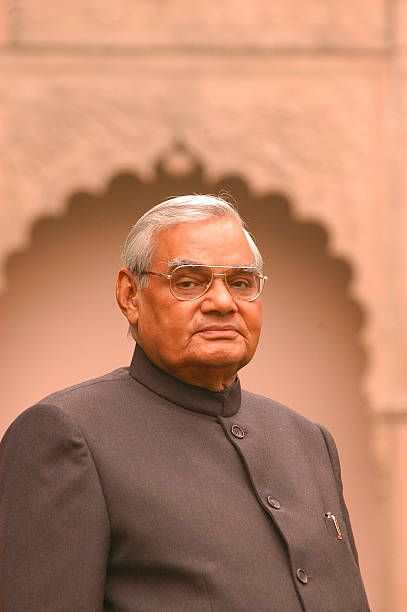
| Attribute | Details |
|---|---|
| Height | 5 ft 9 in (175 cm) |
| Weight | Around 75–80 kg (165–176 lbs) in his prime |
| Eye Color | Dark Brown |
| Hair Color | Black (later turned silver-gray with age) |
| Body Type | Average build, with a dignified and commanding presence that reflected his statesmanlike persona |
Atal Bihari Vajpayee: Age
Atal Bihari Vajpayee was born on December 25, 1924, in Gwalior, Madhya Pradesh (then part of British India). He lived a long and remarkable life, passing away on August 16, 2018, at the age of 93. Throughout his decades-long career in public service, he maintained his charm and wit, earning respect and admiration from across the political spectrum.
Atal Bihari Vajpayee: Height & Weight
Atal Bihari Vajpayee stood at approximately 5 feet 9 inches (175 cm) tall. In his younger and middle years, he maintained a weight of around 75–80 kilograms (165–176 lbs). His average but sturdy physique and his calm demeanor contributed to his reputation as a strong yet approachable leader.
Atal Bihari Vajpayee: Eye & Hair Color
Atal Bihari Vajpayee had dark brown eyes, which conveyed both warmth and authority. His hair was naturally black in his youth but turned silver-gray as he aged, adding to his distinguished and elder-statesman appearance in his later years.
Atal Bihari Vajpayee: Personality & Presence
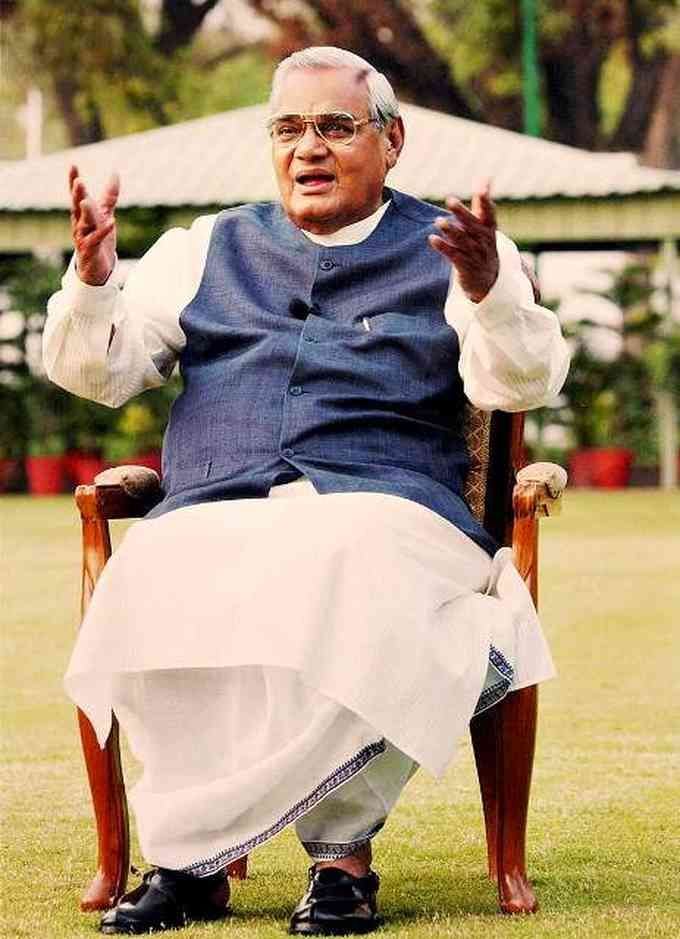
Although not conventionally focused on physical looks, Vajpayee’s charismatic aura, gentle smile, and measured speech left a lasting impression on everyone he met. He carried himself with dignity, often wearing his trademark kurta-pyjama paired with a Nehru jacket, which became synonymous with his public image as a true servant of the people. His appearance complemented his poetic soul and his thoughtful leadership style, making him one of India’s most beloved and respected figures.passionate heart.
Atal Bihari Vajpayee: Educational Background
Atal Bihari Vajpayee, born on December 25, 1924, in Gwalior, Madhya Pradesh (then part of British India), began his education at local schools in Gwalior. He was a diligent and bright student from an early age, known for his love of literature and debate. After completing his schooling, Vajpayee attended Victoria College (now Laxmibai College) in Gwalior, where he earned his bachelor’s degree in Hindi, Sanskrit, and English literature.
Following his undergraduate studies, he moved to Kanpur, where he enrolled at DAV College (affiliated with Agra University). There, he completed his Master’s degree in Political Science, graduating with distinction. During his college years, Vajpayee was deeply influenced by nationalist movements and actively participated in political debates, laying the foundation for his future career in public service.
His educational journey not only shaped his intellectual and rhetorical abilities but also ignited his passion for India’s freedom struggle and governance. Vajpayee’s academic background in literature and political science greatly contributed to his eloquence as an orator and his thoughtful approach as a statesman.
Atal Bihari Vajpayee: Career Overview
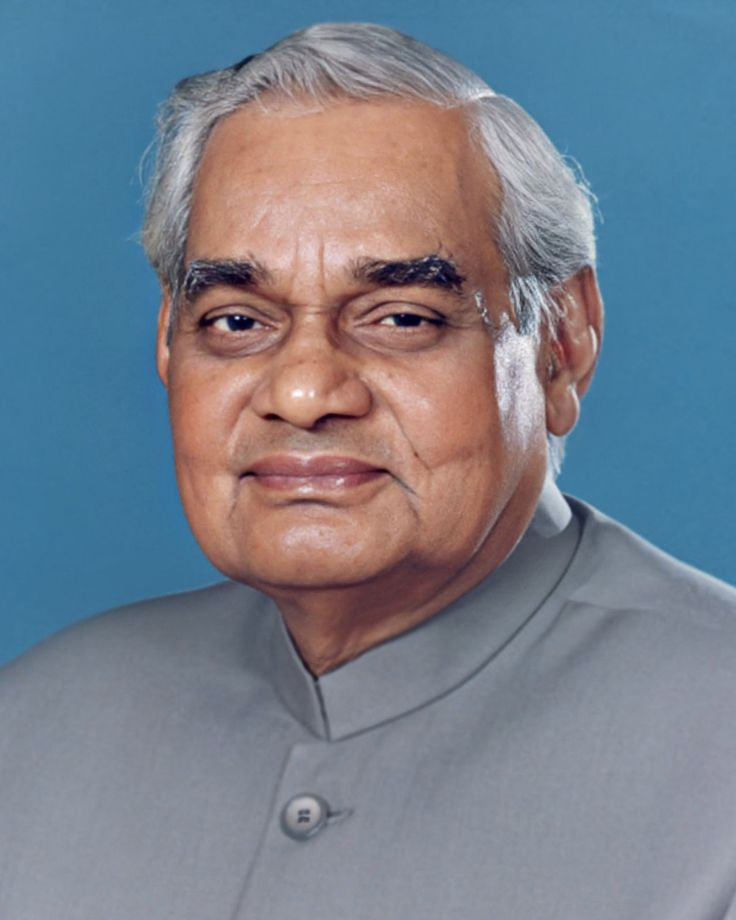
Atal Bihari Vajpayee was an iconic Indian politician, statesman, poet, and orator who served as the 10th Prime Minister of India. Widely respected for his moderate views and statesmanship, he was a founding member of the Bharatiya Jana Sangh (BJS) and later the Bharatiya Janata Party (BJP).
Early Political Career
Vajpayee entered politics as a freedom fighter in the early 1940s, inspired by nationalist ideals. He was initially associated with the Rashtriya Swayamsevak Sangh (RSS) before becoming a prominent member of the Bharatiya Jana Sangh, where he quickly gained a reputation for his eloquence and parliamentary skills. He was elected to Parliament for the first time in 1957, representing Balrampur in Uttar Pradesh.
Rise to Leadership
Over the decades, Vajpayee played a key role in shaping the opposition in Indian politics. He became Minister of External Affairs in 1977 under the Janata Party government, where his diplomatic skills won international praise. After the collapse of the Janata Party, he co-founded the BJP in 1980 and became its most recognizable and moderate face, steering the party into the political mainstream.
Prime Minister of India
Vajpayee served three terms as Prime Minister: briefly in 1996, then from 1998–1999, and finally a full term from 1999–2004. Under his leadership, India conducted the Pokhran-II nuclear tests in 1998, marking India’s emergence as a nuclear power. His tenure also saw economic liberalization, significant infrastructure projects like the Golden Quadrilateral highways, and efforts for peace with Pakistan, including the historic Lahore Bus Yatra and the Agra Summit.
Legacy and Recognition
Vajpayee retired from active politics in 2005 due to ill health but remained an elder statesman admired across party lines. He was awarded the Bharat Ratna, India’s highest civilian honor, in 2015. His political career, poetry, and vision for India continue to inspire millions.
Atal Bihari Vajpayee: Net Worth
At the time of his passing in 2018, Atal Bihari Vajpayee’s exact net worth was never officially disclosed, as he led a simple and modest lifestyle throughout his political career. As a lifelong public servant and politician, his income primarily came from his salary and allowances as a Member of Parliament and later as Prime Minister of India. He was known for his integrity and frugality, living without personal extravagance despite holding India’s highest office. Vajpayee’s true legacy remains his service to the nation, rather than personal wealth or possessions.
Atal Bihari Vajpayee: Wife & Kids
Atal Bihari Vajpayee never married and remained a bachelor throughout his life. Known for his deep commitment to public service and the nation, he chose to dedicate himself entirely to his political and literary pursuits.
Although he did not have a wife or biological children, Vajpayee shared a close, familial bond with the family of his long-time friend Rajkumari Kaul. He treated her children as his own and lived with them as a part of his household. In particular, Namita Bhattacharya, the daughter of Rajkumari Kaul, was often referred to as his adopted daughter and remained by his side, especially during his later years.
Vajpayee was known for his warmth and affection toward his extended family and is remembered not just as a statesman, but also as a caring figure within his close circle.
Atal Bihari Vajpayee: Biography
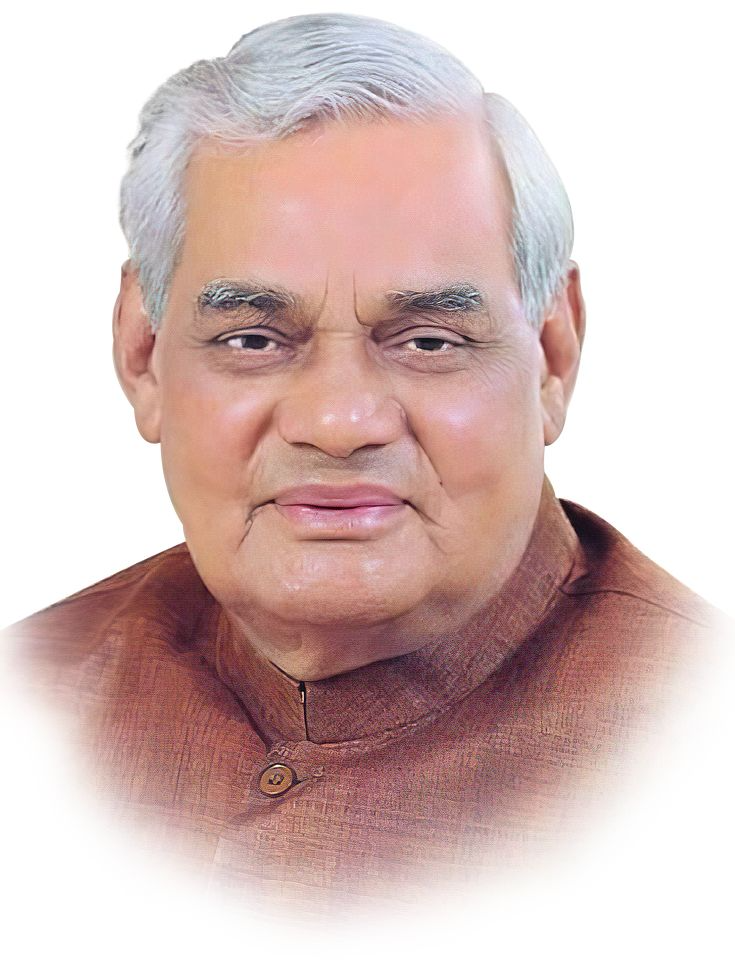
Atal Bihari Vajpayee was born on December 25, 1924, in Gwalior, Madhya Pradesh, into a middle-class Brahmin family. He grew up with his parents, Krishna Bihari Vajpayee and Krishna Devi, and his siblings, in a culturally rich household that valued education and literature. From a young age, Atal displayed a love for poetry, debate, and public speaking, qualities that later defined his political and literary career. He completed his schooling in Gwalior and went on to earn degrees in Hindi literature, political science, and law from Victoria College (now Maharani Laxmi Bai Government College of Excellence) and DAV College, Kanpur.
Atal’s political journey began during India’s freedom movement, where he was inspired by nationalist ideals and became active in the Rashtriya Swayamsevak Sangh (RSS). He soon joined the Bharatiya Jana Sangh, where his eloquence and vision earned him a place in Parliament by 1957. Over the next few decades, he emerged as a key opposition leader, admired for his moderation and statesmanship. In 1980, he co-founded the Bharatiya Janata Party (BJP), becoming its most prominent and respected face.
In 1996, Atal Bihari Vajpayee served a brief term as India’s 10th Prime Minister, followed by two more terms between 1998–2004. His leadership was marked by bold initiatives, including the Pokhran-II nuclear tests, ambitious infrastructure projects like the Golden Quadrilateral, and historic peace efforts with Pakistan, such as the Lahore Bus Yatra. Known for his inclusive governance and dignified diplomacy, he earned respect across the political spectrum.
Beyond politics, Vajpayee was an accomplished poet, known for his evocative Hindi verses, and a celebrated orator whose speeches left a lasting impact. His books of poetry and collected speeches remain widely read and admired.
Although Atal Bihari Vajpayee never married, he maintained close personal relationships, particularly with his foster family, including his foster daughter Namita Bhattacharya, who cared for him in his later years. Even as a bachelor, he was known for his warmth and affable nature, endearing himself to colleagues and citizens alike.
In recognition of his immense contributions to India, he was awarded the Bharat Ratna, India’s highest civilian honor, in 2015. Atal Bihari Vajpayee passed away on August 16, 2018, but his legacy as a statesman, poet, and visionary leader continues to inspire generations.
Atal Bihari Vajpayee’s life is a shining example of how a leader can serve his country with courage, grace, and humanity. His words, his vision, and his poetry will continue to inspire generations of Indians.
Atal Bihari Vajpayee: Social Media Accounts
| Platform | Username / Account |
|---|---|
| @AtalBihariVajpayee (tributes & official BJP posts) | |
| @AtalBihariVajpayeeJi (tribute page) | |
| @atalbiharivajpayeeji (fan & memorial pages) | |
| YouTube | BJP Official Channel (speeches & tributes) |
Interesting Facts About Atal Bihari Vajpayee
- Atal Bihari Vajpayee was born on December 25, 1924, in Gwalior, Madhya Pradesh, India.
- He was one of the founding members of the Bharatiya Jana Sangh, the predecessor to today’s Bharatiya Janata Party (BJP).
- Atalji served as the Prime Minister of India three times: briefly in 1996, then from 1998 to 2004 — making him the first non-Congress leader to complete a full term.
- He was a gifted poet and a skilled orator, known for his powerful speeches both in Parliament and on public platforms.
- Atal Bihari Vajpayee was a key figure in conducting India’s nuclear tests in 1998 at Pokhran, which made India a declared nuclear power.
- He is remembered for initiating significant infrastructure projects, including the Golden Quadrilateral highway network.
- Atalji promoted peace initiatives with Pakistan, including the famous Lahore Bus Yatra in 1999, despite tensions between the two nations.
- He was awarded India’s highest civilian honor, the Bharat Ratna, in 2015 for his contributions to the nation.
- Vajpayee was known for his humility and consensus-building approach, earning respect even from his political opponents.
- Despite his political commitments, he always nurtured his love for writing poetry, many of which are still recited and admired.
- Atalji chose to remain unmarried, devoting his life entirely to public service and the nation’s development.
- His birthday, December 25, is celebrated in India as Good Governance Day in his honor.
Atal Bihari Vajpayee – Final Words
Atal Bihari Vajpayee remains one of India’s most revered leaders, having transformed himself from a passionate young activist into a towering statesman and visionary. His journey reflects the power of dedication, integrity, and inclusive leadership to shape a nation’s destiny. With his eloquence, wisdom, and unshakable commitment to democratic ideals, Atalji inspired millions across political and social divides.
He balanced his formidable political achievements with a deep sense of humanity, showing maturity and restraint even in the most challenging times. Through his policies, poetic spirit, and diplomacy, he redefined what it meant to lead — proving that politics could be conducted with both principle and compassion. Atalji’s life exemplifies how one can remain rooted in one’s values while adapting to the needs of a changing world.
As India continues to build upon the foundations he laid — in governance, infrastructure, defense, and global standing — Atal Bihari Vajpayee stands as a timeless symbol of what true leadership looks like. His story is a testament to courage, vision, and staying true to oneself amidst the pressures of power and public life. Whether through his words, policies, or example, Atalji’s legacy continues to guide and inspire the nation.
His light shines on, proving that the mark of a great leader is not just in the offices they hold, but in the hearts they touch and the future they help create.
FAQs About Atal Bihari Vajpayee
Who was Atal Bihari Vajpayee?
Atal Bihari Vajpayee was an Indian politician, poet, and statesman who served as the 10th Prime Minister of India.
When was Atal Bihari Vajpayee born?
He was born on December 25, 1924, in Gwalior, Madhya Pradesh, India.
When did Atal Bihari Vajpayee pass away?
He passed away on August 16, 2018, in New Delhi, India, at the age of 93.
What is Atal Bihari Vajpayee known for?
He is known for his leadership as Prime Minister, his oratory skills, his poetry, and his role in strengthening India’s nuclear program and economy.
What political party did Atal Bihari Vajpayee belong to?
He was a founding member and senior leader of the Bharatiya Janata Party (BJP).
How many times did Atal Bihari Vajpayee serve as Prime Minister of India?
He served as Prime Minister three times — briefly in 1996, and then full terms from 1998 to 2004.
Where did Atal Bihari Vajpayee study?
He studied at Victoria College (now Maharani Laxmi Bai Government College of Excellence) in Gwalior and then at DAV College, Kanpur, earning degrees in Hindi, English, and Political Science.
Was Atal Bihari Vajpayee married?
No, Atal Bihari Vajpayee never married and remained a bachelor throughout his life.
Did Atal Bihari Vajpayee have any children?
He did not have biological children but was a guardian to the daughters of his long-time companion, Rajkumari Kaul.
What awards and honors did Atal Bihari Vajpayee receive?
He was awarded the Bharat Ratna, India’s highest civilian honor, in 2015. He also received the Padma Vibhushan in 1992.
Was Atal Bihari Vajpayee a poet?
Yes, he was an acclaimed poet, known for his Hindi poetry reflecting patriotism, human emotions, and social issues.
What was Atal Bihari Vajpayee’s role in India’s nuclear tests?
As Prime Minister, he oversaw India’s nuclear tests at Pokhran in 1998, establishing India as a nuclear power.
What is Atal Bihari Vajpayee’s legacy?
His legacy includes his vision for a strong and modern India, efforts toward peace with Pakistan, economic reforms, and his popularity as a statesman admired across party lines.
What was Atal Bihari Vajpayee’s zodiac sign?
His zodiac sign was Capricorn.
